

What to Do When Grass Is Too Long to Mow
- Gabriel Pereira
- Jun 11
- 6 min read
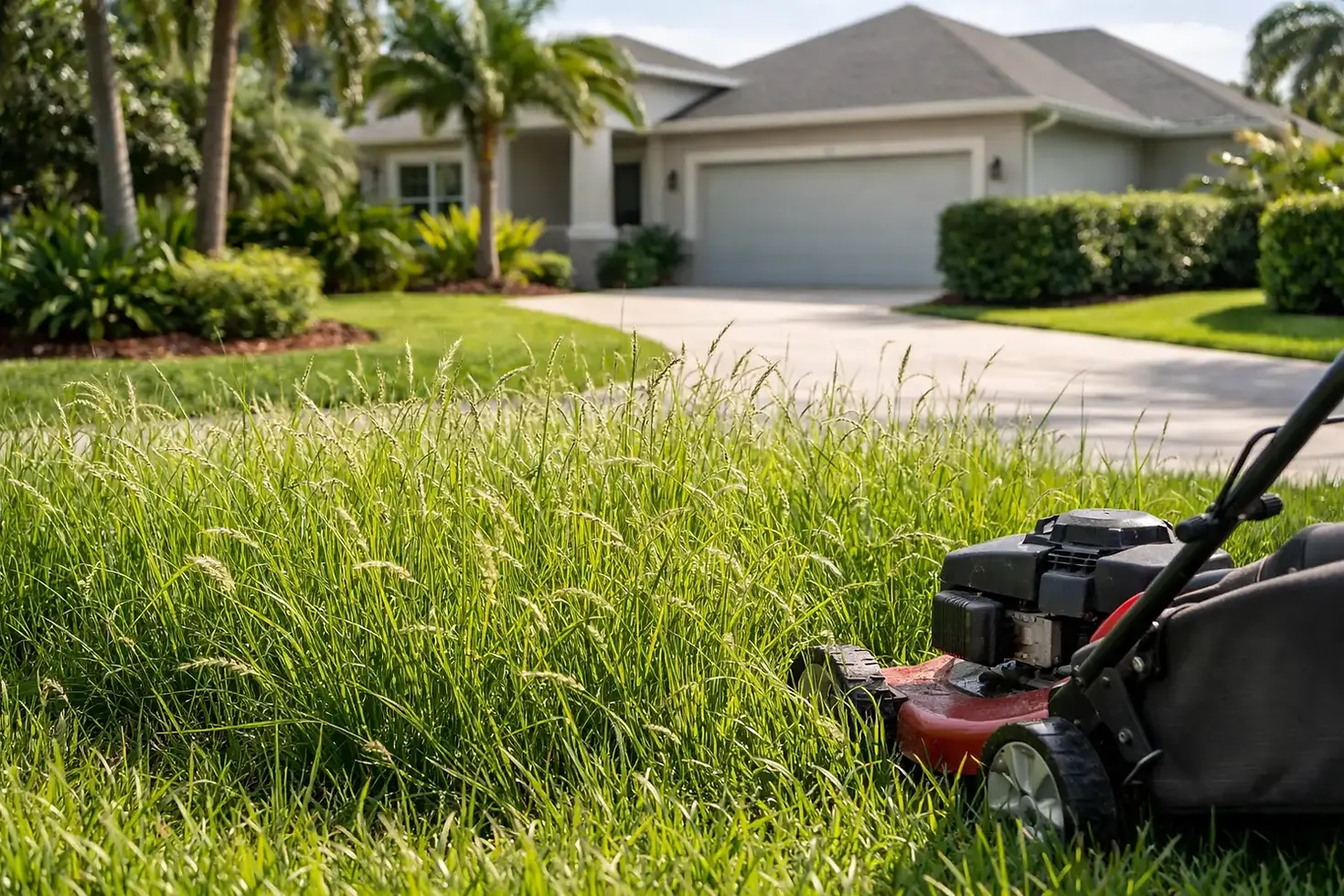
You usually know the problem before you even start the mower. The yard looks thick, uneven, and heavy, and instead of a quick cut, you are suddenly figuring out what to do when grass is too long to mow without leaving clumps, scalping the lawn, or stalling your equipment.
That situation is common in Florida, especially after a stretch of rain, fast summer growth, or a missed service week. The good news is that overgrown grass can usually be brought back under control. The key is not trying to force a normal mow on a lawn that has outgrown normal mowing.
What to Do When Grass Is Too Long to Mow
The first step is to slow down and avoid cutting everything back at once. When grass gets too tall, taking it down in a single pass often creates more problems than it solves. You can end up with large piles of clippings, uneven patches, stress on the lawn, and a finish that looks rough instead of clean.
A better approach is to reduce the height in stages. Raise the mower deck higher than usual and make the first pass just to knock the lawn down. If the grass is extremely long, it may even make sense to trim certain areas first with a string trimmer so the mower is not fighting through dense, folded-over growth.
After that first cut, let the clippings clear, then come back with a second pass at a lower setting if needed. In some cases, the lawn is so overgrown that it is better to wait a day or two between cuts. That gives the grass time to recover and makes it easier to get a more even, polished result.
Why cutting too much at once causes problems
A lot of homeowners want the lawn to go from overgrown to sharp in one afternoon. That makes sense, but grass does not always respond well to that kind of reset. When too much blade is removed at once, the lawn can look shocked, patchy, and lighter in color because you are exposing lower parts of the grass that have not seen much sun.
There is also the cleanup issue. Long grass holds moisture, folds over on itself, and produces heavy clippings. If those clippings sit in thick mats, they can block airflow and sunlight at the soil level. That leaves the yard looking messy and can slow recovery.
Then there is the mower itself. Even a good mower can struggle when grass is excessively tall or damp. You may deal with clogging under the deck, missed strips, wheel ruts, and a cut that looks torn rather than clean. That is why patience matters here. A staged cut is usually the fastest route to a lawn that actually looks good.
How much grass should you cut at one time?
A solid rule is to avoid removing more than about one-third of the grass height in a single mowing. That rule is not perfect in every situation, but it is a smart guide for reducing stress on the lawn.
If your yard normally looks best around 3 to 4 inches and it has shot up far beyond that, do not try to take it straight down to its regular maintenance height. Bring it down gradually. The lawn will usually respond better, and the final result will be cleaner.
This is one of those times when "getting it done" and "getting it right" are not the same thing. The extra pass or extra visit often makes the difference between a lawn that bounces back and one that looks hacked down.
Should you mow long grass wet or dry?
Dry is better whenever possible. Wet, overgrown grass is harder to cut evenly, heavier to discharge, and more likely to clump. It can also make the mower work much harder than it should.
In Florida, waiting for perfectly dry conditions is not always realistic, especially during rainy periods. If you cannot avoid some moisture, try to mow later in the day after the surface has had time to dry out. Even a small improvement in conditions can help the mower cut more cleanly and reduce buildup underneath the deck.
If the lawn is both tall and soggy, that is usually a sign to hold off rather than force it. Cutting under those conditions often creates tracks, tears the grass, and leaves the yard looking uneven.
Practical steps for mowing an overgrown lawn
Start by walking the property. Long grass can hide sticks, toys, palm debris, and other objects that would not be an issue in a regularly maintained yard. Clearing those first protects both the lawn and the equipment.
Next, raise the mower deck to its highest or near-highest setting and make a slow first pass. Do not rush. Overgrown grass needs the blade speed and discharge space to work properly. If you move too fast, the mower is more likely to bog down or leave heavy clumps behind.
After the first pass, look at what the lawn needs. Sometimes one high cut and a thorough cleanup are enough to make the yard look much better. Other times, it needs a second cut at a slightly lower setting to restore a cleaner, more maintained appearance.
If the grass is laying over instead of standing up, change directions on the second pass. That helps lift missed areas and creates a more even finish. Once mowing is complete, blow off surfaces and clean up clippings so the property looks sharp again, not just shorter.
When trimming first makes sense
If certain sections are extremely tall, especially around fences, beds, or edges, using a trimmer first can help reduce the bulk before mowing. This is useful when the grass is too long for the mower to grab evenly or when the blades are bent over and tangled.
That said, trimming everything down by hand is not usually the best answer for a full yard unless it is severely overgrown. It takes longer, can leave an uneven finish, and often creates a lot of loose material to clean up. In most cases, a combination of careful mowing and targeted trimming works better.
What not to do when grass is too long to mow
The biggest mistake is dropping the mower deck too low and trying to force a finished look in one pass. That can scalp high spots, stress the lawn, and leave the yard with a rough, yellowed appearance.
Another mistake is leaving heavy rows of clippings across the lawn. If there is too much material to mulch back in cleanly, it needs to be cleared. A neat cleanup matters just as much as the cut itself when you are trying to bring an overgrown yard back into shape.
It is also worth avoiding repeated mowing when the equipment is clearly struggling. If the mower keeps clogging, stalling, or tearing the grass, the lawn is telling you the approach needs to change. Raising the deck, waiting for drier conditions, or splitting the work into stages is usually the better move.
When it is better to call for professional help
Sometimes the lawn is simply beyond a quick DIY fix. If the grass is extremely tall, thick, or uneven, or if the yard has gone too long between cuts, professional service can save time and produce a better result.
That is especially true when appearance matters. Homeowners who care about curb appeal do not just want the lawn shorter. They want it to look clean, controlled, and properly maintained. That means thoughtful mowing, edging, trimming, and cleanup, not just knocking the yard down and moving on.
A reliable lawn care crew can also spot the difference between a lawn that needs one reset cut and one that should be brought down gradually over multiple visits. That judgment matters because every yard is a little different depending on grass type, moisture, recent growth, and how long it has been since the last service.
For homeowners in Parrish, Lakewood Ranch, Bradenton, and nearby areas, this comes up more often than people expect during fast-growing parts of the year. A dependable maintenance schedule is usually the easiest way to avoid the problem altogether and keep the property looking consistently sharp.
The best long-term fix is consistency
Once the lawn has been brought back under control, the goal is simple: do not let it get that far again. Regular mowing keeps the grass at a manageable height, helps the yard look more even, and makes each visit faster and cleaner.
It also protects the overall appearance of the property. A well-kept lawn frames the home, sharpens the edges, and gives the whole yard a more finished look. That is why routine service matters. It prevents the catch-up work that is harder on the lawn and more frustrating for the homeowner.
If your yard is already past the point of a normal mow, do not force it. Take it down in stages, clean it up properly, and focus on getting back to a steady maintenance rhythm that keeps your home looking neat and cared for.


Comments