

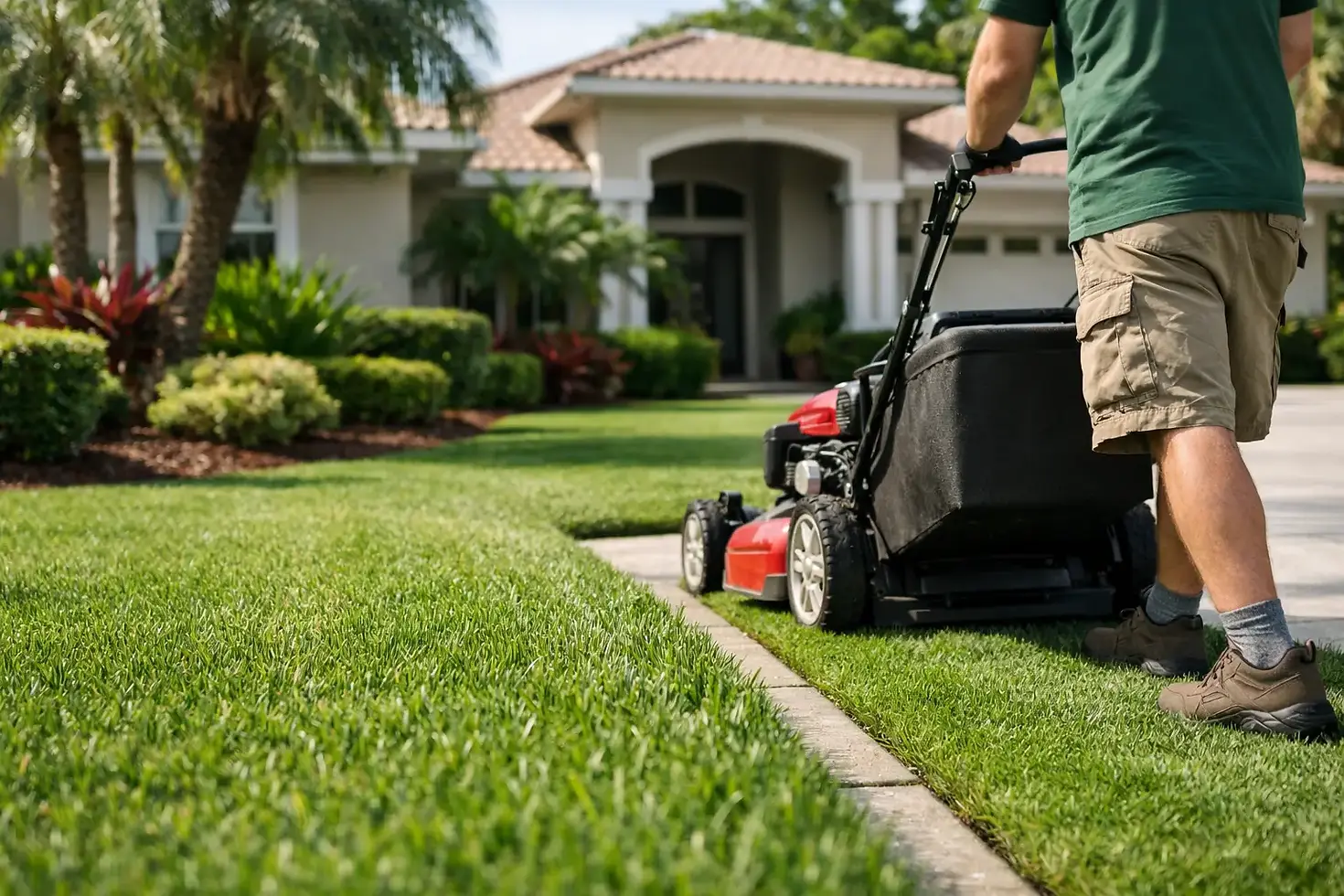
How to Cut Grass Properly at Home
- Gabriel Pereira
- Jun 10
- 6 min read
A lawn can look fine from the street and still be cut the wrong way. You usually see it a few days later - uneven color, ragged tips, thin spots, or that stressed look that makes the whole yard feel less cared for. If you want to know how to cut grass properly, the goal is not just getting it shorter. The goal is a clean, even cut that keeps the lawn healthy and the property looking sharp.
For most homeowners, mowing seems simple until the results start slipping. Maybe the grass grows back unevenly, weeds show up more clearly, or the yard never quite gets that crisp, maintained look. Good mowing comes down to a few basics done consistently: the right height, the right timing, sharp blades, and a clean finish around the edges.
Why cutting grass properly matters
Grass is not just a green surface. It is a living plant, and every mow affects how it grows next. When you cut too short, mow with dull blades, or scalp high spots, you put the lawn under stress. That stress can lead to weaker growth, more visible brown patches, and a thinner overall look.
A proper cut does the opposite. It helps grass grow thicker, shades the soil better, and gives the yard a fuller appearance. For homeowners who care about curb appeal, that difference is noticeable. A neatly cut lawn with sharp edges makes the whole property feel more polished, even before you touch the beds, hedges, or mulch.
How to cut grass properly without stressing the lawn
The biggest mistake homeowners make is mowing too low. It feels efficient in the moment because it seems like you can wait longer before the next cut, but short-cut grass often pays for it later. It loses some of its natural protection from heat and sun, and in Florida conditions that can show up quickly.
A better approach is to follow the one-third rule. Never remove more than one-third of the grass blade in a single mowing. If the lawn has gotten overgrown, it is better to bring it down gradually over multiple cuts than to take it all off at once. That keeps the grass from going into shock and helps it recover with a more even appearance.
Mowing height matters too, and it depends on your grass type. Many Florida lawns do best when kept a bit higher than homeowners expect. St. Augustine, for example, usually performs better when it is not cut too short. Bermuda can handle a lower cut, but only when maintained consistently. If you are not sure what type of grass you have, that uncertainty is one more reason not to mow aggressively low.
Start with the mower, not the lawn
Before the mower touches the yard, the blade condition matters. A dull blade tears the grass instead of cutting it cleanly. That leaves frayed tips that can turn brown and make the lawn look rough even right after mowing. Many homeowners assume they have a watering or fertilizer issue when the real problem is simply a blade that needs sharpening.
The mower deck also needs to be level. If one side sits lower, the lawn will show it. You may end up with stripes that look uneven in a bad way, or patches that seem scalped for no clear reason. Tire pressure, wheel settings, and blade balance all play a role in getting a clean, consistent cut.
It also helps to clear the lawn before mowing. Small sticks, palm debris, toys, and loose clutter can interrupt the cut and create an uneven finish. A few extra minutes of prep usually saves time and gives you a better-looking result.
When to mow for the cleanest cut
Timing changes the outcome more than people realize. Cutting wet grass is one of the fastest ways to get clumping, streaking, and a messy finish. Wet blades bend instead of standing upright, and the mower has a harder time making an even pass. The clippings can also stick underneath the deck and reduce performance as you go.
The best time to mow is when the grass is dry but not under peak stress from the hottest part of the day. Mid-morning to early evening often works well, depending on recent rain and humidity. In Southwest Florida, that can take a little judgment because lawns often stay damp longer than expected. If the grass still feels heavy with moisture, waiting a bit can make a noticeable difference.
There is also a scheduling factor. During faster growing months, waiting too long between cuts makes it harder to follow the one-third rule. More frequent mowing often produces a healthier lawn and a cleaner overall look, even though each visit removes less.
Mowing patterns that improve the look of the yard
A good mowing pattern does more than create visual order. It helps prevent wear. If you mow the exact same route every time, the wheels and turning points can start to press down the same areas repeatedly. Over time, those sections may thin out or develop a worn appearance.
Changing direction from one mow to the next helps keep growth more upright and reduces rutting. One week you might mow lengthwise, the next diagonally, then switch again. The lawn tends to stand up better when it is not always pushed in the same direction.
You also want to avoid tight, aggressive turns. Those can tear up the grass, especially when the lawn is soft. Smooth turns and overlapping passes lead to a more even finish. The result is subtle, but it is part of why some lawns look professionally maintained and others look rushed.
The finish matters as much as the cut
A freshly mowed lawn does not look complete if the edges are shaggy. Clean edging along driveways, sidewalks, and beds is what gives the property that finished, well-kept appearance. It frames the lawn and makes the mowing lines look intentional.
Trimming is just as important in spots the mower cannot reach, such as around trees, fences, mailboxes, and landscape borders. The key is not to overdo it. Trimmers can scalp grass quickly if used too aggressively, especially around tree roots or bed edges. The goal is to match the cut height of the lawn, not carve out lower circles around every obstacle.
Blowing off hard surfaces is the final step that pulls everything together. Grass clippings left on the driveway, sidewalk, or patio can make an otherwise clean job look unfinished. A quick cleanup leaves the property looking neat instead of halfway done.
Common mistakes that make lawns look rough
Most mowing problems are not caused by one major error. They usually come from small habits repeated over time. Cutting too low is one. Mowing with a dull blade is another. Letting the lawn get too tall between cuts is also common, especially during rainy periods when growth speeds up fast.
Another mistake is treating every part of the lawn the same. Some areas hold more moisture, some grow faster, and some sit higher and scalp more easily. A lawn often needs a little adjustment as conditions change. That is part of proper care. Good mowing is consistent, but it is not careless.
There is also a difference between simply shortening the grass and maintaining a lawn. Homeowners who want a yard to look clean week after week usually need more than one pass with a mower. They need mowing, trimming, edging, and cleanup working together. That is where reliable routine service often makes the biggest difference.
How to keep a lawn looking consistently sharp
If your goal is a healthy lawn and stronger curb appeal, consistency matters more than occasional perfection. A yard cut at the right height on a regular schedule usually looks better than one that gets cut dramatically and irregularly. Grass responds well to steady maintenance, and so does the appearance of the whole property.
That is especially true for busy homeowners. It is one thing to mow when you have time. It is another to keep up with changing growth, blade maintenance, edging, trimming, and cleanup every week. When those details are handled consistently, the yard stays neat instead of cycling between overgrown and freshly cut.
GreenLine Landscaping focuses on exactly that kind of dependable upkeep for homeowners who want clean cuts, sharp edges, and a lawn that always looks cared for. Whether you mow your own yard or hire it out, the standard stays the same: cut it cleanly, cut it at the right height, and finish the job properly.
A well-kept lawn does not need to look complicated to stand out. It just needs to look even, healthy, and consistently maintained every time you pull into the driveway.


Comments